



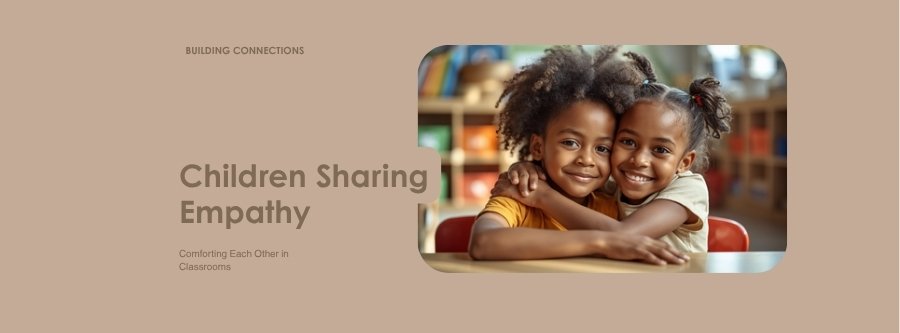
Empathy, the ability to understand and share another person’s feelings, is one of the most important capacities a human being can develop. It forms the foundation of healthy relationships, moral reasoning, and prosocial behaviour. But when does empathy actually emerge, and how can parents and educators nurture it in young children?
The Stages of Empathy Development
Empathy does not appear suddenly. It develops in stages across the early years, closely linked to cognitive and social development.
Emotional contagion is the earliest form, observable from birth. When one newborn in a hospital nursery cries, others often begin crying too. This is not yet empathy. It is a reflexive response to emotional stimulation, but it demonstrates an innate sensitivity to others’ emotional states that forms the raw material for later empathic development.
Between 12 and 18 months, toddlers begin to show egocentric empathy. They recognise that another person is distressed but respond based on what would comfort themselves, for example, offering their own favourite toy to a crying child or bringing their own parent to comfort a distressed peer. This represents a significant cognitive advance: the child recognises distress in another and is motivated to help, even if their theory of mind is not yet developed enough to understand that the other person has different needs.
Between two and three years, children begin to develop a more differentiated understanding of others’ emotions. They start to recognise basic emotions in others (happy, sad, angry, scared) and can respond more appropriately, such as fetching a peer’s blanket rather than their own. This emerging ability to distinguish between self and other marks the beginning of genuine empathy.
Between three and five years, children develop increasingly sophisticated perspective-taking abilities. They begin to understand that other people have thoughts, feelings, and beliefs that may differ from their own, which is the foundation of theory of mind. They can comfort a friend who is sad about something the child itself would not find upsetting, showing genuine emotional attunement. Prosocial behaviours like sharing, helping, and consoling become more frequent and intentional.
Factors That Influence Empathy Development
While all typically developing children show the capacity for empathy, the depth and frequency of empathic responses are significantly influenced by environment and experience. Children whose own emotions are consistently validated and named by caregivers develop stronger emotional vocabularies and greater empathic sensitivity. Those who witness empathic behaviour modelled by adults, such as comforting a neighbour or expressing concern for a friend, internalise empathy as a social norm.
Conversely, children whose emotions are routinely dismissed or who experience harsh, punitive parenting may develop weaker empathic responses, not because they lack the capacity, but because their emotional development has been constrained.
Nurturing Empathy in Early Childhood
Adults can actively nurture empathy through several evidence-based strategies. Naming emotions frequently, both the child’s and others’, builds emotional literacy. Discussing characters’ feelings during shared reading helps children practise perspective-taking in a safe context. Encouraging helping behaviours (even simple tasks like passing a tissue to a crying friend) reinforces prosocial impulses. Modelling empathic responses in everyday interactions demonstrates empathy in action.
In early childhood settings, educators who create warm, responsive environments where emotions are welcomed and explored lay the groundwork for empathy to flourish. Activities like role-play, puppetry, collaborative art projects, and group discussions about feelings all provide opportunities for children to practise understanding and responding to others’ emotional states.
Tracking social-emotional development alongside other domains gives educators a holistic view of each child’s growth. With tools like Personhood360, educators can document wellbeing markers and social-emotional milestones over time, identifying children who may need additional support in developing empathy and connection skills, and sharing these insights with families to ensure consistency between home and centre.