



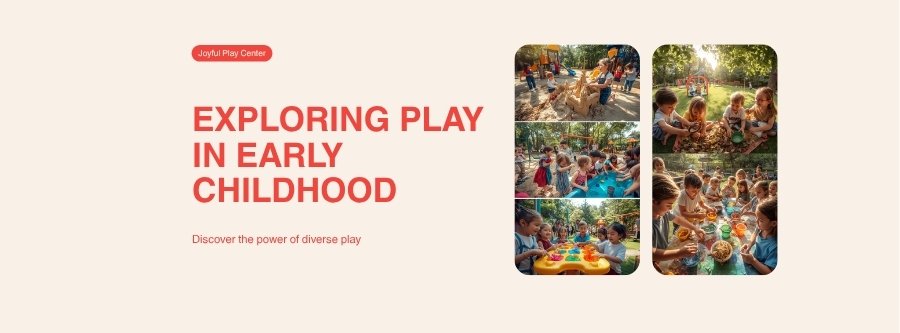
Not all play is the same, and different types of play support different aspects of development. Understanding the variety of play types, and ensuring children have access to all of them, helps parents and educators create environments that nurture the whole child.
Physical Play
Physical play includes running, climbing, jumping, dancing, and any activity that involves large body movements. It develops gross motor skills, cardiovascular fitness, spatial awareness, and body confidence. Rough-and-tumble play, wrestling, chasing, and tumbling, is a specific form of physical play that, despite making some adults uncomfortable, is linked to the development of self-regulation, social reading, and boundary-setting.
Constructive Play
Building with blocks, Lego, sand, clay, or loose parts falls under constructive play. This type of play develops spatial reasoning, mathematical thinking, problem-solving, fine motor skills, and persistence. Constructive play also invites collaboration and negotiation when children build together, strengthening social skills alongside cognitive ones.
Imaginative and Pretend Play
Pretend play, also called dramatic play or symbolic play, is one of the richest forms of play for cognitive and social development. Children who engage in pretend play develop stronger executive function, language skills, theory of mind (understanding others’ perspectives), emotional regulation, and narrative ability. Providing props, costumes, and open-ended materials supports imaginative play, but children’s imaginations are the most important ingredient.
Sensory Play
Sensory play involves experiences that engage the senses: water play, sand play, finger painting, play with textured materials, cooking activities, and exploration of sounds and smells. Sensory play supports neural development, fine motor skills, scientific thinking (observation and experimentation), and emotional regulation (many children find sensory play calming and centering).
Social Play
Any play that involves interaction with others, from simple turn-taking games to complex cooperative projects, develops social skills, empathy, communication, conflict resolution, and a sense of belonging. The progression from solitary play to parallel play to associative play to cooperative play reflects children’s growing social competence across the early years.
Creative Play
Drawing, painting, sculpting, music-making, and dance allow children to express ideas, emotions, and experiences through creative media. Creative play develops fine motor skills, aesthetic awareness, emotional expression, and divergent thinking: the ability to generate multiple ideas and solutions, which is fundamental to creativity and innovation.
Risky Play
Play that involves an element of risk (climbing high, moving fast, using tools, playing near water, rough-and-tumble) is increasingly recognised as important for development. Risky play builds confidence, resilience, risk assessment skills, and physical competence. Research suggests that children who are denied access to appropriate risk in play may develop greater anxiety and poorer risk-management skills over time.
Creating a Balanced Play Diet
The most developmentally rich environments offer children access to all of these types of play, both indoors and outdoors, throughout the day. Educators who observe which types of play each child gravitates toward, and which they avoid, can design environments that both honour preferences and gently expand comfort zones.
Documenting children’s engagement across play types is a powerful planning tool. Personhood360 enables educators to record play observations linked to developmental domains, ensuring that every child’s play diet is balanced, intentional, and responsive to their individual needs.