



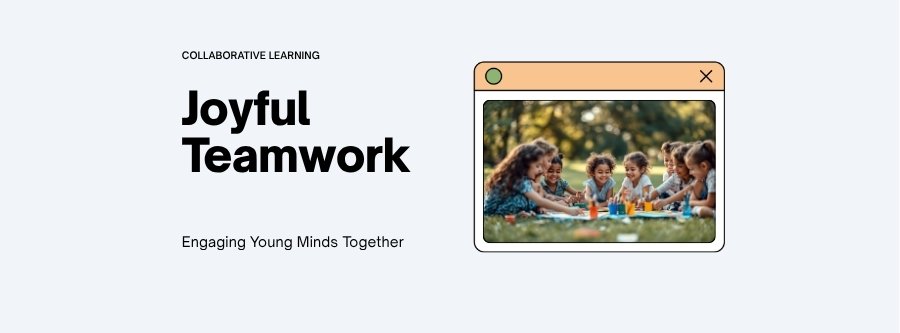
Cooperative play, playing together toward a shared goal, is one of the most developmentally significant forms of social play. It emerges in earnest around age four, building on earlier stages of solitary, parallel, and associative play. For preschoolers, cooperative play is where social, cognitive, and emotional skills converge in complex, meaningful ways.
What Cooperative Play Looks Like
In cooperative play, children work together toward a common purpose. They might build a structure together, act out a shared pretend scenario with assigned roles, create a mural, set up a “shop” with cashiers and customers, or collaborate on a sandpit project. What distinguishes cooperative play from earlier social play stages is the presence of shared goals, role differentiation, and genuine interdependence. Each child contributes something to the collective activity.
Developing Communication Skills
Cooperative play demands more sophisticated communication than any other play type. Children must negotiate roles, establish rules, coordinate actions, and resolve disagreements. This constant negotiation develops expressive language, listening skills, assertiveness, and the ability to articulate and defend ideas.
Building Empathy and Perspective-Taking
Working toward a shared goal requires understanding others’ viewpoints. A child building a tower with a friend must consider what the friend wants the tower to look like, not just their own vision. Role-playing scenarios require stepping into another person’s shoes, understanding how a “patient” would feel or what a “teacher” would say. These experiences strengthen theory of mind and empathic understanding.
Developing Problem-Solving and Conflict Resolution
Cooperative play inevitably involves conflict: disagreements about what to build, which rules to follow, and who gets which role. These conflicts, when navigated without excessive adult intervention, are powerful learning opportunities. Children learn to compromise, take turns leading and following, generate creative solutions, and manage the emotional discomfort of not getting their way. These are skills that will serve them throughout their education and beyond.
Fostering a Sense of Belonging
When children contribute to a shared project and see their contribution valued by peers, they develop a sense of belonging and social competence. This is particularly important for children who struggle with social confidence. A well-structured cooperative activity can provide a safe entry point into social interaction and help them experience the reward of collaborative success.
Encouraging Cooperative Play
Educators can encourage cooperative play by providing materials and provocations that invite collaboration (large-scale projects, group art, dramatic play setups), modelling cooperative language and behaviour, pairing children strategically to support emerging social skills, and providing enough time for cooperative play to develop organically. Rushed schedules do not allow the extended engagement that cooperative play requires.
Documenting cooperative play provides rich evidence of social and cognitive development. Using Personhood360, educators can capture these collaborative moments, linking them to wellbeing markers and developmental domains, and share them with families as evidence of their child’s social growth.