



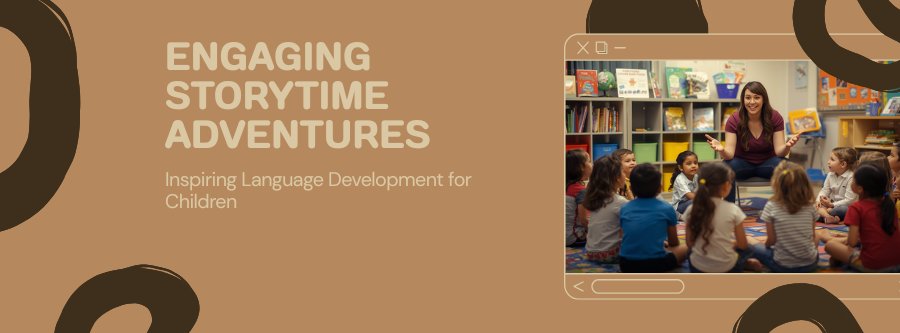
Storytelling, the act of creating and sharing narratives through spoken word, is one of the oldest and most powerful tools for language development. While reading aloud from books is enormously valuable, oral storytelling offers unique benefits that complement and extend the literacy experience.
Language Richness
When adults tell stories (rather than read them), they naturally adjust their language to the child’s level, use expressive intonation, make eye contact, and respond to the child’s reactions in real time. This creates a dynamic, interactive language experience that is uniquely responsive to the individual child. Storytelling also introduces children to narrative structure (beginning, middle, and end), which is a foundational cognitive framework for organising and understanding experience.
Vocabulary Expansion
Stories introduce children to vocabulary they rarely encounter in everyday conversation. Words like “enormous,” “perilous,” “magnificent,” and “astonished” appear naturally in narrative contexts, and children absorb them because they are embedded in meaningful, emotionally engaging content. Research shows that children learn new words most effectively when they encounter them in rich, contextualised narrative, not through isolated vocabulary drills.
Encouraging Children to Tell Their Own Stories
When children are invited to tell their own stories (about their day, their dreams, their imaginative worlds), they practise organising ideas sequentially, using descriptive language, considering an audience, and communicating complex thoughts. These narrative skills are strongly linked to later literacy and academic success.
Educators who capture children’s storytelling moments using Personhood360 can document language development in authentic contexts, building rich profiles that inform responsive teaching and demonstrate the power of narrative-based learning to families.