



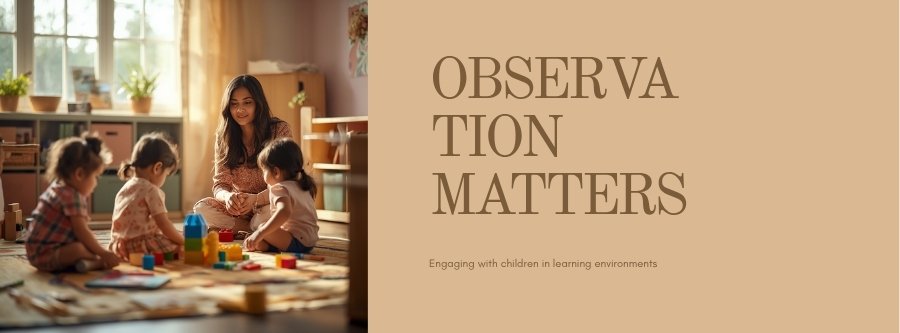
Observation is the foundation of responsive early childhood practice. When educators observe children closely and use those observations to inform their planning, the result is programming that is genuinely child-centred – responsive to children’s interests, strengths, and developmental needs rather than driven by predetermined content or adult agendas.
The Observation-Planning Cycle
Effective practice follows a cyclical process: observe children’s play, interests, and development; analyse observations to identify learning, emerging interests, and areas of need; plan experiences that extend children’s learning and address developmental goals; implement the planned experiences while remaining responsive to children’s engagement; and reflect on the outcomes before beginning the cycle again.
Types of Observation
Anecdotal observations capture specific moments in narrative form. Running records document a sequence of behaviours over a period of time. Frequency counts track how often a specific behaviour occurs. Learning stories combine observation with analysis and planning in a narrative format. Photographs and video supplement written observations with visual evidence.
What to Look For
Effective observation goes beyond recording what children do – it interprets what the behaviour reveals about the child’s learning, development, and wellbeing. What skills is the child demonstrating? What interests are emerging? What developmental domain is being engaged? What might the child be ready for next? What support might they need?
From Observation to Action
Observations only add value when they inform action. This might mean extending an interest by adding new materials or provocations, scaffolding a skill that is emerging but not yet secure, adapting the environment to better support a child’s needs, or raising a developmental concern with families based on documented evidence.
Personhood360 connects observation directly to planning by linking documented observations to developmental domains and wellbeing markers, enabling educators to translate what they see into what they do with clarity and intention.