



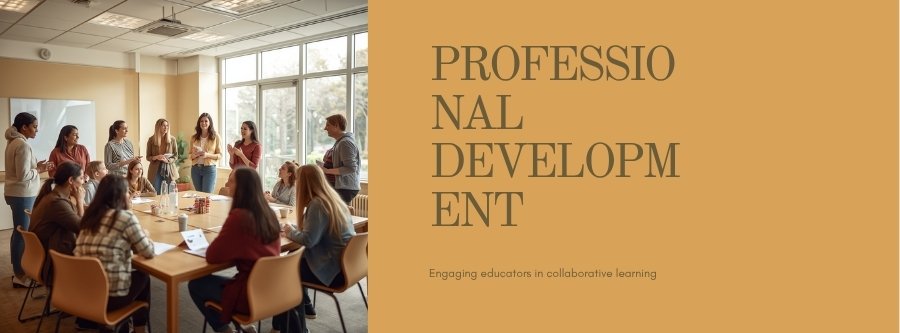
Professional development (PD) is not one-size-fits-all. The most valuable PD is relevant to educators’ daily practice, grounded in evidence, sustained over time, and supported by leadership. Understanding what makes PD effective helps educators and leaders invest their limited time and resources wisely.
Characteristics of Effective PD
Research identifies several features of professional development that actually changes practice: it is sustained over time (not a one-off workshop), it is embedded in daily work (not disconnected from the classroom), it includes opportunities for practice and feedback, it is collaborative (involving peers and mentors), and it is aligned with the educator’s specific context, challenges, and goals.
High-Impact PD Topics
The PD topics that consistently produce the greatest improvements in educator practice and child outcomes include responsive interactions and relationships (how to be attuned, warm, and responsive in every interaction), play-based pedagogy (how to design, extend, and document play-based learning), observation and documentation skills (how to see, record, and interpret children’s learning), social-emotional learning strategies (how to support children’s emotional development and behaviour), and inclusive practices (how to adapt environments and programming for children with diverse needs).
Beyond Formal PD
Some of the most powerful professional development happens informally: collaborative reflection with colleagues, peer observation, reading current research, engaging in professional learning communities, and mentoring. Creating a workplace culture that values continuous learning is as important as funding formal training.
Platforms like Personhood360 contribute to professional development by embedding best-practice frameworks into daily documentation workflows, helping educators develop their observational, analytical, and reflective skills through the act of using the platform itself.