



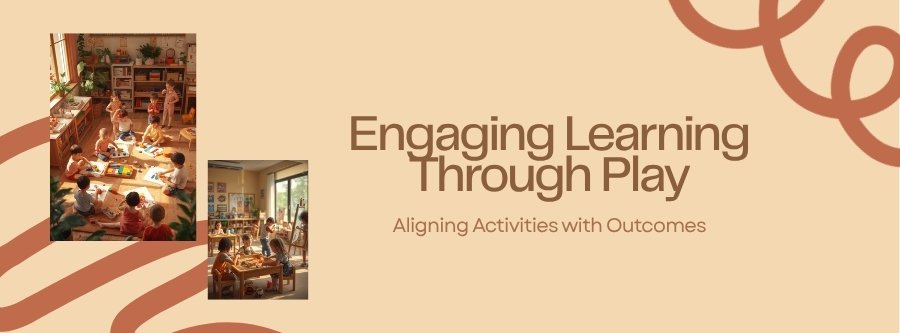
Aligning activities with the five EYLF learning outcomes is a core expectation of Australian early childhood practice. Yet many educators find the process confusing, time-consuming, or formulaic. Understanding the intent behind outcome alignment – and approaching it with professional judgment rather than box-ticking – makes the process both more meaningful and more manageable.
Understanding the Outcomes
The five EYLF outcomes are broad and intentionally open-ended: children have a strong sense of identity; children are connected with and contribute to their world; children have a strong sense of wellbeing; children are confident and involved learners; and children are effective communicators. Each outcome contains sub-elements that provide more specific guidance, but the framework deliberately avoids prescriptive learning targets.
Alignment Is Not a Checklist
Effective outcome alignment is not about forcing every activity into every outcome. It is about recognising which outcomes are naturally addressed by the experiences you plan, and being intentional about which outcomes you want to emphasise. A single rich play experience may address multiple outcomes simultaneously – block play, for example, can develop identity (confidence and agency), wellbeing (physical development), learning (problem-solving), and communication (collaborative language).
Starting with the Child
The most meaningful alignment starts with the child, not the outcome. Observe the child’s interests, strengths, and developmental stage. Plan experiences that respond to what you see. Then identify which outcomes the experience addresses. This child-first approach produces authentic, responsive programming that naturally aligns with the EYLF.
Documentation That Demonstrates Alignment
Quality documentation demonstrates the connection between children’s experiences and EYLF outcomes through well-crafted observations, learning stories, and planning documents that explicitly reference relevant outcomes. Personhood360 simplifies this process by enabling educators to tag observations with relevant EYLF outcomes and developmental domains, creating automatic alignment that reduces administrative effort while strengthening the evidence of quality practice.