



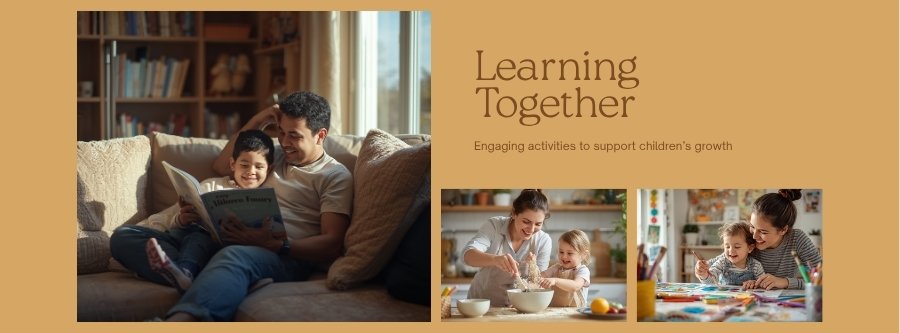
The home environment is every child’s first and most enduring learning context. The good news for parents is that supporting early learning at home does not require special training, expensive materials, or structured lessons. It requires presence, conversation, and the willingness to let everyday experiences become learning opportunities.
Talk and Listen
Conversation is the single most powerful learning tool available to parents. Narrate your daily activities, describe what you see, ask open-ended questions, and – most importantly – listen to your child’s responses. The back-and-forth of genuine conversation builds language, cognitive skills, and the secure relationship that underpins all learning.
Read Together
Daily shared reading is one of the highest-impact activities a parent can do. It builds vocabulary, comprehension, print awareness, phonological awareness, and – when it is warm and enjoyable – a love of literacy that lasts a lifetime.
Play Together
Joining your child’s play – on their terms, following their lead – communicates that their interests and ideas matter. Build with blocks, play pretend, dig in the garden, cook together, draw, paint, and explore. The content of the play matters less than the quality of the shared experience.
Embrace Everyday Learning
Sorting laundry involves classification. Setting the table involves counting. Walking to the park involves observation and vocabulary. Cooking involves measurement, sequencing, and science. The entire domestic environment is a learning environment when adults make the learning visible through conversation and engagement.
Connect with Your Child’s Centre
Ask your child’s educators what topics and interests are being explored at the centre, and extend them at home. If the centre uses a platform like Personhood360 to share learning stories, use those insights as conversation starters and activity inspiration at home.