


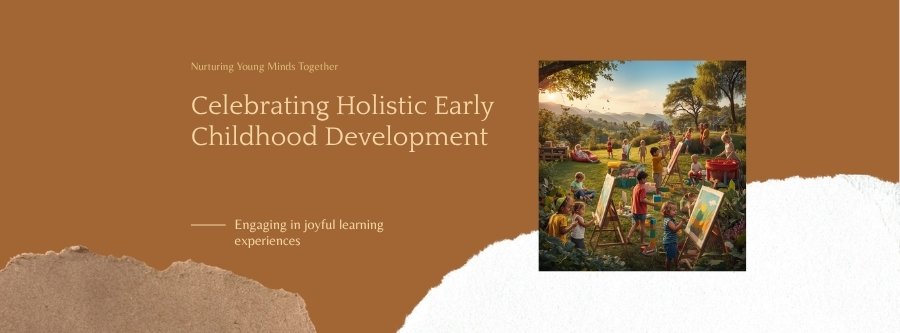
A holistic approach to early childhood development recognises that children are not a collection of separate domains – cognitive, physical, social, emotional – that can be developed independently. They are integrated beings whose development across all areas is interconnected, interdependent, and inseparable. When we nurture the whole child, every domain benefits.
What Holistic Development Means
Holistic development means attending to every dimension of a child’s growth simultaneously: physical health and motor skills, cognitive and intellectual development, language and communication, social competence and relationships, emotional wellbeing and self-regulation, creative expression and imagination, cultural identity and belonging, and spiritual awareness and wonder. No single domain takes precedence – all are valued, nurtured, and tracked.
Why Holistic Matters
Development across domains is deeply interconnected. A child’s ability to learn (cognitive) depends on their ability to attend (which depends on physical health, sleep, and emotional regulation). Their ability to form relationships (social) depends on their communication skills and emotional understanding. Their confidence to take risks (emotional) depends on their physical competence and sense of belonging. When any domain is neglected, development in other domains is compromised.
Holistic Practice in Action
Holistic practice involves designing environments that engage all domains simultaneously (which play-based environments naturally do), observing and documenting development across all areas (not just the easily measurable ones), planning experiences that integrate physical, cognitive, social, creative, and emotional elements, and communicating with families about the whole child (not just academic progress).
Holistic Assessment
Holistic assessment tracks development and wellbeing across all domains, using multiple methods (observation, learning stories, developmental checklists, wellbeing tracking) to build a comprehensive picture. It recognises that a child who is thriving in some areas and struggling in others needs different support than a child who is progressing evenly across all domains.
Personhood360 embodies the holistic approach, integrating nine wellbeing markers with eight developmental domains into a single platform that ensures educators see – and respond to – the whole child.