



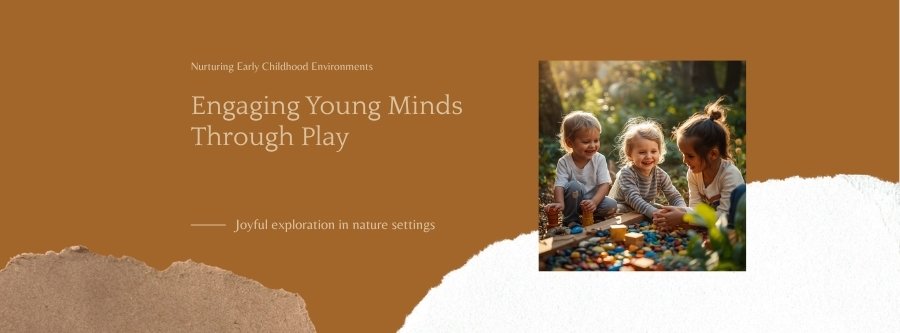
A wellbeing-focused curriculum places children’s physical, emotional, and social wellbeing at the centre of educational planning and practice. Rather than treating wellbeing as a background condition, it recognises wellbeing as both a foundational enabler of learning and a core learning outcome in its own right.
The Evidence for Wellbeing-Centred Approaches
Research consistently shows that children who experience high levels of wellbeing in their early childhood settings are more engaged learners, demonstrate stronger social competence, show greater resilience, and achieve better developmental outcomes across all domains. The mechanism is straightforward: children who feel safe, healthy, and emotionally supported are free to direct their energy toward exploration, learning, and connection.
What a Wellbeing-Focused Curriculum Looks Like
In practice, a wellbeing-focused curriculum features warm, responsive relationships at its core; routines designed to promote comfort, autonomy, and predictability; environments that support physical health, emotional safety, and sensory comfort; programming that explicitly addresses social-emotional skills; assessment that includes wellbeing alongside developmental progress; and communication with families that centres on the whole child.
Measuring Wellbeing
For wellbeing to be genuinely central, it must be measured with the same rigour as other developmental domains. This requires structured observation frameworks, consistent tracking over time, and tools that make wellbeing visible and actionable. Personhood360 provides exactly this – with nine wellbeing markers integrated into the documentation and tracking system, it enables educators to monitor, measure, and respond to each child’s wellbeing with evidence and intention.