



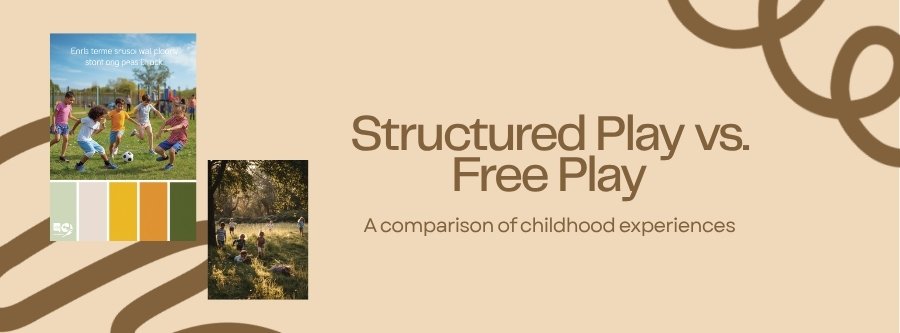
Parents and educators often hear that children need both structured and unstructured play, but the distinction between the two, and why both matter, is not always clear. Understanding each type, and the unique developmental benefits it offers, helps adults create balanced experiences that serve the whole child.
Defining the Terms
Unstructured play (also called free play) is child-directed. The child chooses what to play, how to play, and for how long. There are no adult-determined rules, objectives, or outcomes. Examples include building whatever they want with blocks, making up a pretend game with friends, digging in the sandpit, or exploring a garden.
Structured play (also called guided or organised play) involves adult-determined rules, goals, or instructions. Examples include organised games (duck-duck-goose, musical chairs), art activities with specific steps, sport training, board games, and group activities led by an educator or parent.
Between these two extremes lies guided play: activities that are designed by adults to support specific learning goals but that give children significant autonomy in how they engage. Setting up a dramatic play area with doctor-themed props, for example, is guided play. The educator has designed the environment with intentional learning goals, but the children determine the direction of the play.
The Benefits of Unstructured Play
Unstructured play is where children develop intrinsic motivation, creativity, problem-solving skills, self-regulation, and social negotiation. Because there are no adult-imposed rules, children must create their own, deciding what the game is, who plays what role, and what happens when disagreements arise. This process develops executive function, conflict resolution skills, and the ability to manage one’s own behaviour without external direction.
Unstructured play also fosters resilience. Without adult intervention, children must navigate boredom, frustration, and social challenges independently, building the emotional muscles that support lifelong wellbeing.
The Benefits of Structured Play
Structured play develops skills that unstructured play may not. Following rules teaches impulse control and deferred gratification. Team-based activities develop cooperation and sportsmanship. Step-by-step activities (like following a recipe or building a model from instructions) develop sequencing, planning, and attention to detail. Structured play also introduces children to cultural games, music, dance, and sports that enrich their experience and connect them to community traditions.
Getting the Balance Right
The optimal balance depends on the child’s age and context. For children under three, unstructured play should dominate, with structured activities kept brief, playful, and responsive to children’s engagement. For three-to-five-year-olds, a mix of both is appropriate, with the emphasis still tilting toward unstructured and guided play. The general principle is that children should have significantly more free play than structured activity in the early years.
In early childhood settings, intentional educators design environments that invite rich unstructured play while weaving in structured experiences that target specific developmental goals. Documenting children’s engagement across both types, using tools like Personhood360, helps educators ensure that every child has access to a balanced play diet that meets their developmental needs.