



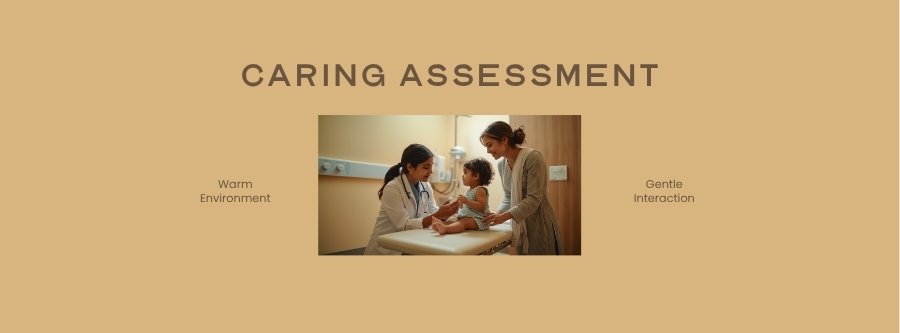
Deciding to seek an assessment for your child’s development can feel daunting, but the process is less intimidating than many parents fear. Understanding what assessment involves, who conducts it, and how to access it can empower parents to take the step that may be the most important decision they make for their child’s future.
When to Seek Assessment
Assessment is appropriate whenever a parent, caregiver, or educator has persistent concerns about a child’s development. You do not need certainty that something is wrong. You need only a consistent worry that your child may not be developing as expected. Common triggers include persistent speech delays, significant motor difficulties, limited social engagement, behavioural challenges beyond what is age-appropriate, and feedback from early childhood educators about developmental concerns.
Starting the Process
The usual first step is to discuss your concerns with your child’s general practitioner or paediatrician. They can conduct an initial screening using standardised developmental tools and, if warranted, refer you to specialists. In Australia, child health nurses also conduct regular developmental checks and can initiate referrals. Early childhood educators can contribute valuable observational data to support the assessment process.
What Assessment Involves
A comprehensive developmental assessment may include standardised tests of cognitive, language, and motor development, observation of the child in natural settings, parent and caregiver interviews, review of developmental history, and, depending on concerns, assessments by specific specialists (speech pathologist, psychologist, occupational therapist, paediatrician). Assessment is non-invasive and usually involves play-based activities that feel natural to the child.
After the Assessment
Assessment results provide a detailed picture of the child’s strengths and areas of need, which guides the development of an intervention plan. For children eligible for NDIS support, the assessment report informs funding decisions. For all children, it provides a roadmap for targeted support, whether through formal therapy, adjustments to the childcare environment, or strategies for families to implement at home.
Overcoming Barriers
Common barriers to seeking assessment include fear of labelling, hope that the child will “grow out of it,” long wait times, and cost. While these concerns are valid, delaying assessment delays support, and early support is consistently more effective than later support. Many assessment services offer bulk-billing or reduced fees, and early intervention programs can begin while formal diagnosis is still in progress.
Educators who use Personhood360 to document developmental observations over time can provide families and clinicians with detailed, evidence-based records that support the assessment process and ensure that concerns are grounded in systematic observation rather than anecdote.