



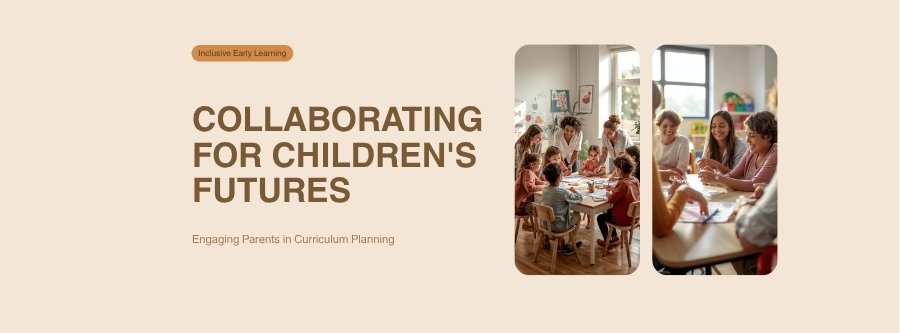
In high-quality early childhood programs, parents are not just consumers of education – they are contributors to it. The EYLF and NQS both emphasise the importance of collaborative partnerships with families, including their involvement in curriculum planning and programming.
Why Parent Input Matters
Parents know things about their child that educators cannot observe in the centre context: home interests, cultural practices, family routines, temperament patterns, and the experiences that shape their child’s world outside childcare. When this knowledge is integrated into curriculum planning, the result is programming that is more responsive, more culturally inclusive, and more personally meaningful for each child.
How Parents Can Contribute
Share your child’s current interests and passions. Tell educators about significant events at home (new sibling, travel, family celebrations) that might influence your child’s play and behaviour. Contribute cultural knowledge – recipes, songs, stories, celebrations – that enriches the program for all children. Provide feedback on activities and experiences your child has responded to positively or negatively. Participate in goal-setting conversations about your child’s development.
How Educators Can Facilitate Parent Contributions
Educators can actively invite parent input through regular communication, structured surveys, informal conversations, and shared planning tools. Making it clear that parent input is genuinely valued – and demonstrating how it influences the program – builds engagement and trust.
Digital platforms like Personhood360 facilitate this partnership by creating a shared space where educators document learning and families contribute insights, ensuring that curriculum planning is genuinely collaborative and responsive to each child’s full context.