



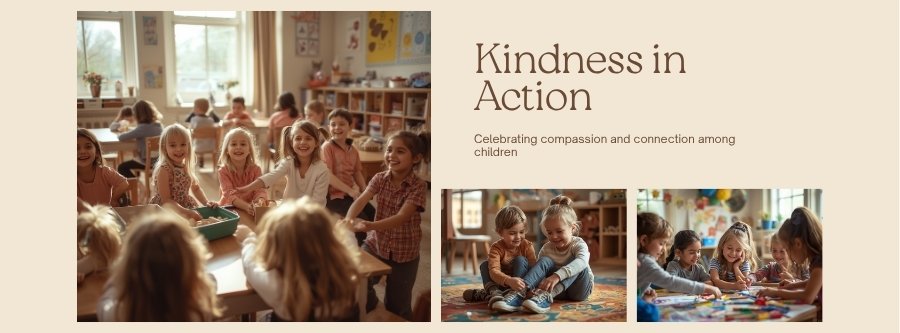
Empathy is not just a desirable personality trait. It is a foundational social skill that enables children to form relationships, resolve conflicts, and participate constructively in communities. In early childhood education, cultivating empathy is both an explicit goal and an embedded practice that permeates every aspect of the program.
Empathy as a Learning Foundation
Children who develop empathy are better learners. Empathic children are more likely to engage cooperatively with peers, resolve conflicts constructively, follow social norms, and contribute positively to group dynamics, all of which support a productive learning environment. Research shows that empathy in early childhood predicts academic achievement, social competence, and mental health in later years.
How Educators Cultivate Empathy
Skilled educators cultivate empathy through daily practice: narrating emotions, asking perspective-taking questions, reading stories that explore diverse emotional experiences, providing opportunities for helping and caring (watering plants, comforting a friend), creating a culture of kindness where empathic behaviour is noticed and named, and modelling empathy in every interaction.
Beyond “Be Nice”
Effective empathy education goes beyond teaching children to “be nice.” It helps children understand that people can feel differently about the same situation, that actions have emotional consequences for others, and that they have the power to positively impact how others feel. This deeper understanding supports genuine moral development and prosocial behaviour that persists beyond the watchful eye of an adult.
Tracking empathy development alongside other wellbeing markers using Personhood360 helps educators identify each child’s social-emotional growth trajectory and plan experiences that nurture empathic understanding across the early years.