



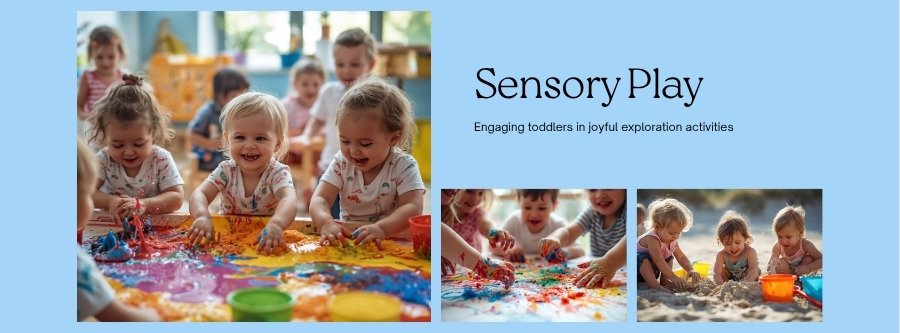
Sensory play, activities that stimulate a child’s senses of touch, sight, sound, smell, and taste, is a cornerstone of early childhood education. Far from being a messy indulgence, sensory play is one of the most neurologically significant activities a young child can engage in. It builds the brain, develops fine motor skills, supports emotional regulation, and lays foundations for scientific thinking.
How Sensory Play Builds the Brain
The brain develops through use. Every time a child touches, tastes, smells, sees, or hears something, neural pathways fire and strengthen. Sensory play provides a rich, multi-sensory experience that stimulates multiple brain regions simultaneously, building the dense neural networks that underpin all future learning. During the first five years, when the brain is most plastic, sensory experiences literally shape brain architecture.
Sensory play also develops sensory integration: the brain’s ability to organise and make sense of information from multiple senses at once. A child playing with water is processing visual information (watching the water flow), tactile information (feeling the temperature and texture), auditory information (hearing the splash), and proprioceptive information (feeling the weight and movement of the water). This multi-sensory processing strengthens the neural connections that support attention, coordination, and learning.
Motor Skill Development
Sensory play is a natural fine motor workout. Squeezing playdough, pouring sand, finger painting, threading pasta, and manipulating small objects all develop the hand strength, dexterity, and hand-eye coordination that writing and self-care tasks demand. The tactile feedback from sensory materials also helps children develop pressure sensitivity: knowing how hard to press a crayon or how gently to hold a delicate object.
Language and Cognitive Development
Sensory play invites rich language. As children explore materials, adults can introduce descriptive vocabulary (sticky, rough, cold, heavy, squishy, grainy) that expands children’s linguistic repertoire. Sensory experiences also stimulate curiosity and scientific thinking. Children naturally observe, compare, predict, and experiment during sensory play, building the foundations of inquiry-based learning.
Emotional Regulation
Many children find sensory play calming and centering. The repetitive, rhythmic nature of activities like pouring, squeezing, and moulding can reduce anxiety and support self-regulation. For children who are feeling overwhelmed, a sensory activity can serve as a restorative experience that helps them return to a calm, ready-to-learn state. Some children, however, are sensory-sensitive and may find certain textures or sensations aversive. Respecting these preferences while gently expanding tolerance is important.
Sensory Play Ideas
Effective sensory play does not require expensive equipment. Water play (with cups, funnels, sponges), sand and mud play, finger painting, playdough (homemade or commercial), rice and pasta tubs with scoops and containers, jelly and foam play, nature exploration (collecting textures from the garden), and cooking activities all provide rich sensory experiences. The key is variety: engaging different senses across different activities and allowing children extended time to explore at their own pace.
Educators who document sensory play experiences can demonstrate the learning value of these activities to families and inform planning for individual children. Personhood360 supports this by enabling educators to capture sensory play observations linked to developmental domains, ensuring that these foundational experiences are recognised, valued, and built upon.