



Two-year-olds are at a fascinating stage of social development. They are intensely interested in other people, both adults and peers, yet their social skills are still rudimentary. The result is a mixture of delightful moments of connection and equally spectacular conflicts. Understanding what social development looks like at age two helps parents and educators respond with patience and intentionality.
Emerging Social Awareness
By two years of age, most children demonstrate a growing awareness of others’ emotions. They notice when a parent or peer is upset and may attempt to offer comfort, though their efforts are often clumsy and self-referential (offering their own favourite toy rather than something the distressed person might prefer). They begin to imitate social behaviours they observe in adults and older children, such as feeding a doll, talking on a toy phone, or sweeping the floor with a child-sized broom.
Two-year-olds also begin to show awareness of social norms, though compliance is inconsistent. They understand the concept of “mine” (often the first social concept they master), begin to grasp basic turn-taking with adult support, and may show rudimentary signs of sharing, though genuine sharing remains rare and should not be expected at this age.
Parallel Play and Beyond
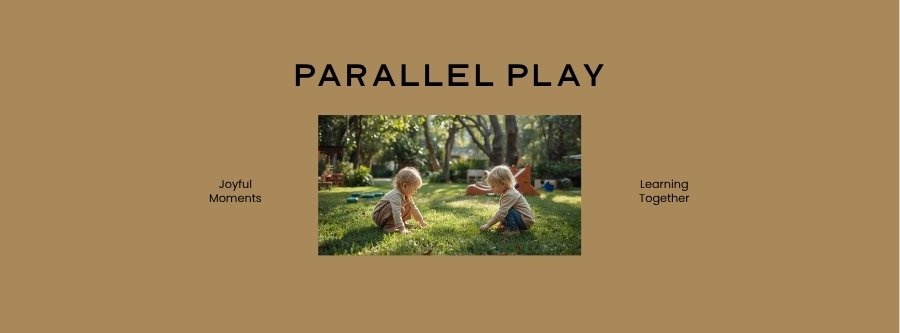
The dominant mode of social play at age two is parallel play: playing alongside other children with similar materials but without direct interaction. Two-year-olds may sit side by side at a sand table, each engaged in their own activity, occasionally glancing at what the other is doing. This is not failed social interaction. It is a developmentally appropriate stage in which children learn from observation and begin to develop comfort in the presence of peers.
Brief episodes of interactive play do occur at two, usually involving simple activities like chasing, rolling a ball back and forth, or copying each other’s actions. These interactions are typically short-lived and may quickly dissolve into conflict over materials or space. True cooperative play, playing together toward a shared goal, emerges more reliably around age three to four.
Emotional Development at Two
Two-year-olds experience emotions intensely but have very limited tools for managing them. The result is the behaviour that has given this age its reputation: tantrums, refusals, and emotional meltdowns that can seem disproportionate to the trigger. This is not defiance. It is the natural consequence of strong emotions meeting an immature regulatory system.
Two-year-olds are beginning to identify basic emotions in themselves and others (happy, sad, angry, scared) and can label them with support. They are developing a rudimentary sense of self, expressing preferences and asserting independence. They may show jealousy when a caregiver’s attention goes to another child, or distress when separated from a primary attachment figure.
Supporting Social Development at Two
The most effective strategies for supporting two-year-olds’ social development include providing opportunities for parallel play with peers in safe, well-resourced environments; modelling social behaviours like sharing, turn-taking, and using words to express needs; naming emotions consistently; and keeping expectations developmentally appropriate. Expecting a two-year-old to share graciously is unrealistic and counterproductive.
In early childhood settings, educators who document social development milestones alongside cognitive and physical growth build a richer understanding of each child. Personhood360 allows educators to track these social-emotional observations over time, identifying emerging strengths and areas where additional support may benefit a child’s social growth and wellbeing.